
The Weekly Plan That Holds Everything Together
A rhythm that keeps us grounded—without over-planning every minute

If you’ve been following along for a bit, you already know this:
I don’t run our home by winging it.
But I also don’t over-plan it.
There’s a middle ground I’ve found that gives us structure without rigidity—and it’s one of the biggest reasons our weeks feel calm, not chaotic.
We Don’t Plan Everything—We Plan the Rhythm
Every week already has a shape.
Not a strict schedule… but a rhythm.
That rhythm is what reduces my mental load more than anything else.
Because instead of waking up every day wondering:
What are we doing today?
What should I cook?
How do I fit everything in?
Most of those decisions are already made.
Not in detail—but in direction.
If you want a deeper look at how I think about this, I shared more in “How I Run Our Household Like a Simple Operating System” and “The 5 Systems Every Household Actually Needs.”
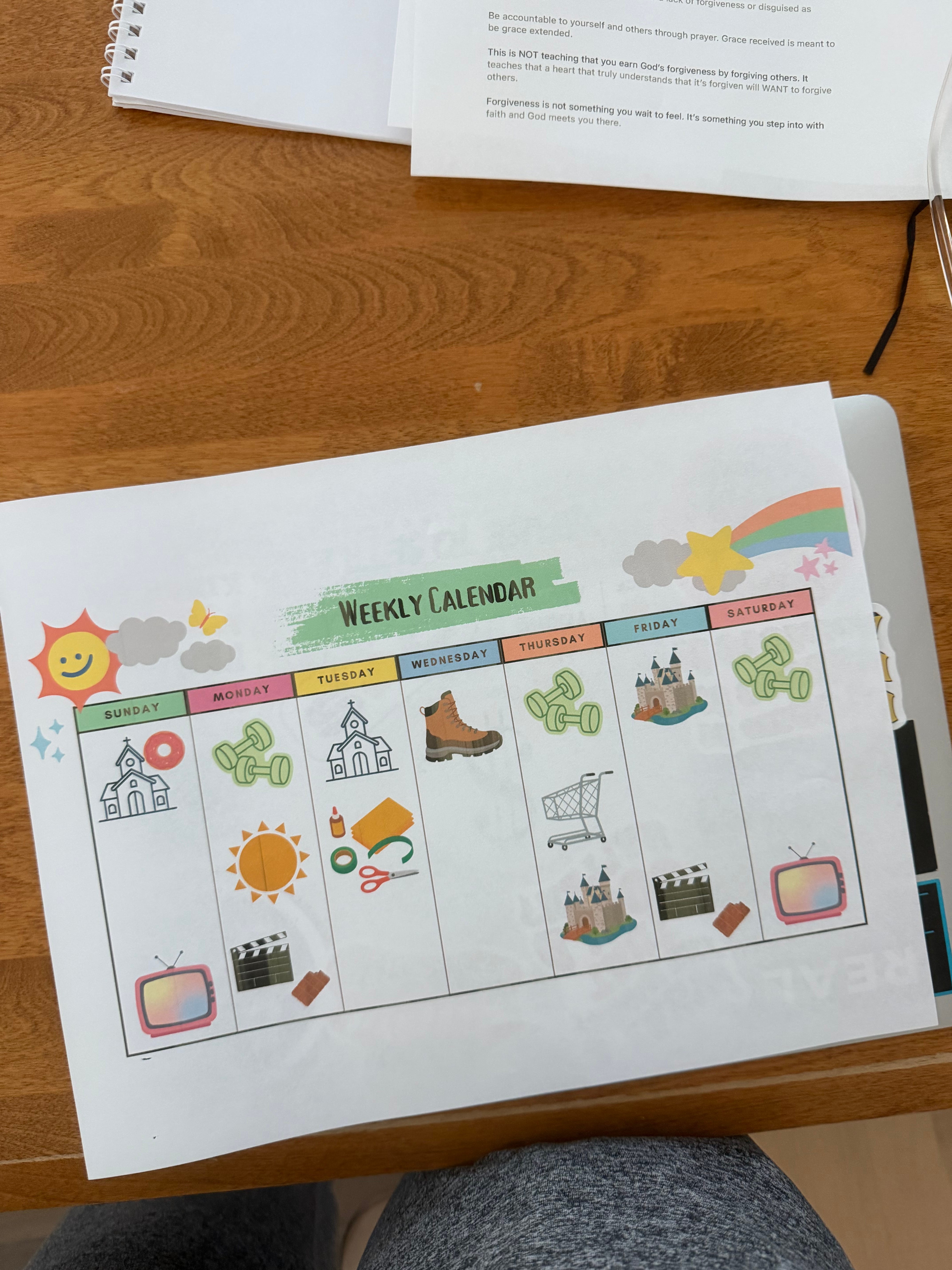
What Our Week Actually Looks Like
Every Sunday after church—while the kids nap—I sit down and plan the week.
The whole thing takes about 30 minutes.
Here’s the framework I’m working within:
Mondays → Light + Simple Outing
After the gym, we do something easy and fun—like the library or a playground.
Nothing complicated. Just something that gets us out of the house.
Tuesdays → Built-In Community
I have Bible study, and the kids get time with friends.
That’s our “activity” for the day.
Wednesdays → Big Adventure Day
This is our longer, outdoor day.
Think trails, local springs, picnics—time to explore and just be kids.
Thursdays → Errands + Reset
Grocery shopping, life admin, and making it fun (yes, usually with a cookie or Costco pizza involved).
Fridays → Something Fun + Flexible
We usually do something Disney-related—whether it’s a park, a resort, or just being out in that environment.
Weekends → Open + Intentional
One day is slower, restful.
The other is flexible—something fun, or something simple.
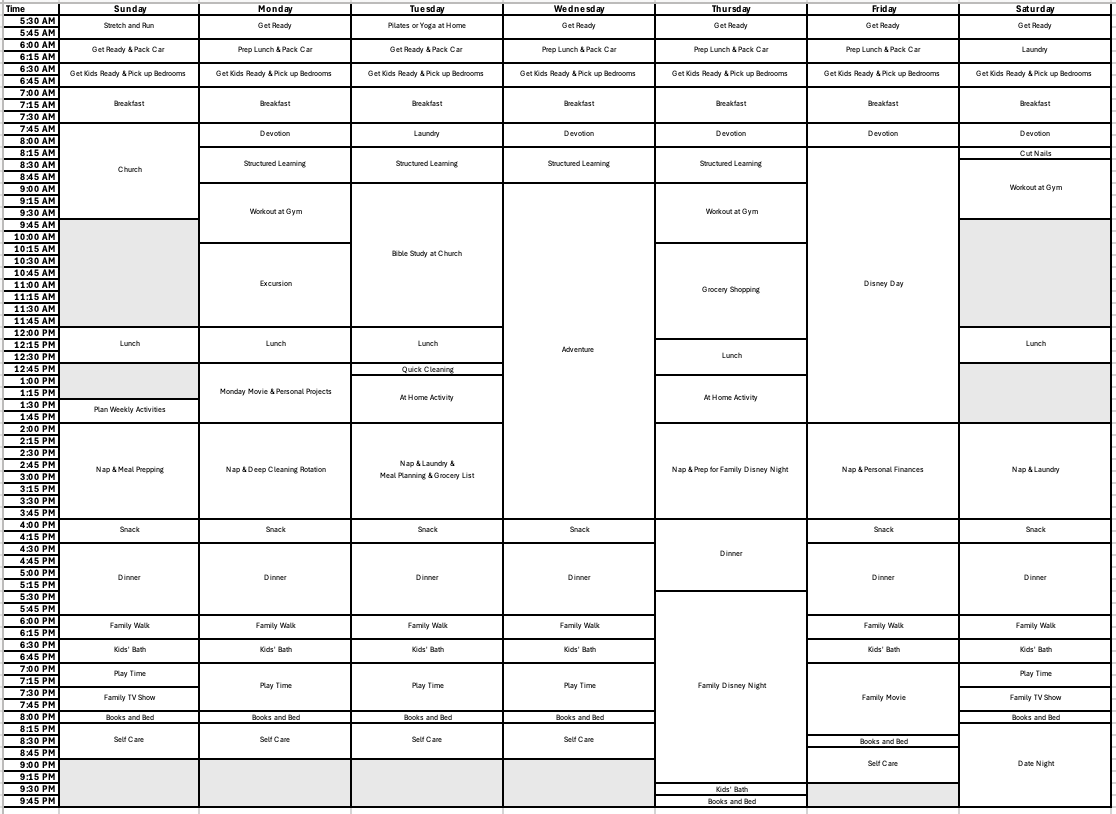
The Key: I Choose Details, Not the Structure
When I sit down on Sunday, I’m not building a week from scratch.
I already know the type of day each one will be.
All I’m doing is deciding:
Which playground?
Which trail?
Which activity fits what we’re learning that week?
Because I loosely follow a Montessori-style approach with my kids, I like to align our outings with what they’re currently learning.
It gives our days more intention—without adding more pressure.

Then I Layer in Meals (Strategically)
Once the activities are planned, I match our meals to our energy.
This part matters more than people think.
Because meals aren’t just about food—they’re about capacity.
Here’s how I think about it:
Monday & Tuesday → More creative meals (I have more energy)
Wednesday → Quick + easy (we’re out most of the day)
Thursday → Leftovers (errand day + usually out in the evening)
Friday → Simple meals (keep it light)
Weekend → One leftover day + one slower, more intentional meal
That’s it.
Nothing fancy—just aligned.
If you want a deeper breakdown of how I approach this, I shared more in “How I Plan My Meals Once a Week.”
Why This Works So Well
This system works because it removes constant decision-making.
I’m not asking myself the same questions over and over again.
I’m making a handful of decisions once—and letting that carry us through the week.
It also helps me communicate clearly with my husband.
He knows where we’ll be, what’s going on, and how the week flows—without needing a daily update.
And maybe most importantly…
It leaves room for real life.
We still have spontaneity.
We still have flexibility.
We still have days where things shift.
But we’re not starting from zero every morning.

A Question For You
What’s one decision you find yourself making over and over again each week?
That might be the first place to create a little structure.
Before You Go
If this kind of rhythm is something you’re trying to build, you’d probably love my free Weekly Reset Checklist.
It’s what I personally use to plan our week in under 30 minutes.
You’ll get it when you subscribe.
And if this resonated, feel free to share it with someone who might need a little more structure (without the overwhelm).
With you in it,
Mills